
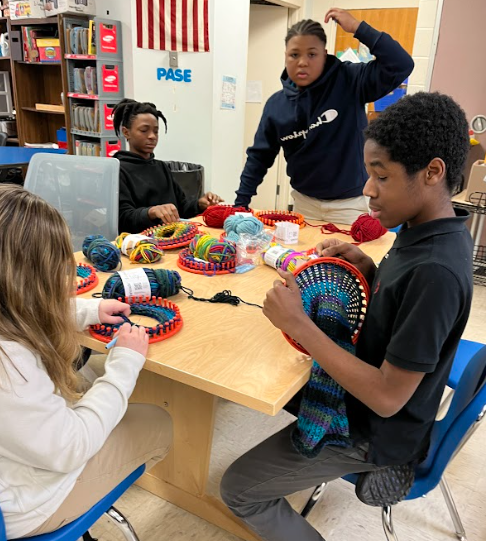
WMS Students learn to use a loom to knit
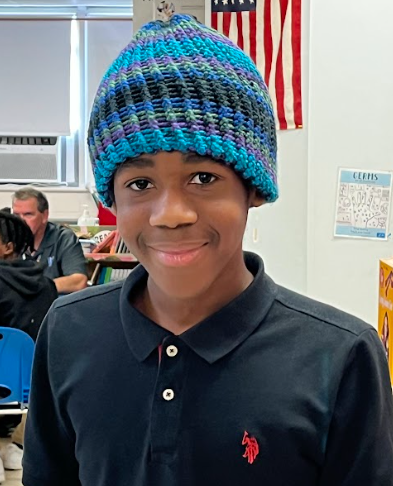
Students in Mrs. Smoyer’s class at Woodbridge Middle School have been learning to use a loom to knit hats. Knitting looms are an underrated gem in middle school classrooms and clubs. Simple, hands-on and surprisingly powerful, they offer students a creative outlet while quietly building a wide range of academic and life skills. Whether used in art class, after-school programs or as part of a mindfulness or STEM activity, knitting looms are a perfect fit for this age group.
One of the biggest advantages of knitting looms is the accessibility. Unlike traditional needle knitting, looms don’t require complex hand position or advanced coordination. Mrs. Willey taught the students the basic technique in a single session and they started producing real results almost immediately.
That early success matters. For middle schoolers, who are often navigating confidence and self-esteem, seeing tangible progress keeps them motivated and willing to try something new.
Using a knitting loom helps students develop fine motor control, hand-eye coordination, and bilateral movements (using both hands together). These skills support handwriting, drawing, typing and even scientific lab work. Because the motion is repetitive and structured, students strengthen these skills without it feeling like “practice” or work.
Middle school can be noisy, busy and overwhelming. Loom knitting naturally encourages calm concentration. The rhythmic process of looping yarn and lifting stitches helps students slow down, focus on the present moment and reduce stress
Many teachers notice that loom knitting is especially beneficial for students who struggle with anxiety, attention or sensory regulation.
Knitting looms quietly reinforce math concepts such as:
· Counting and pattern recognition
· Sequencing and repetition
· Measuring length and estimating materials
Students also learn problem-solving when stitches drop, tension changes or patterns don’t turn out as expected. Fixing mistakes becomes a lesson in patience and perseverance rather than failure.
With different yarn colors, textures and patterns, loom knitting allows middle schoolers to express their personal style. Scarves, hats, headband and small gifts become a canvas for creativity.
Making something functional and wearable gives students a strong sense of price, especially when they can say, “I made this myself.” Not every project turns out perfectly the first time, and that’s a good thing. Loom knitting teaches students that progress takes time, mistakes can be fixed and effort leads to improvement. These lessons translate directly into academic resilience and long-term learning habits.
Because looms can be adapted and used at different paces, all students can participate meaningfully, making them ideal for diverse classrooms.
Beyond the classroom, knitting is a lifelong skill. Students learn that they can create useful items with simple tools and materials, fostering independence and appreciation for handmade work in a fast, disposable world.
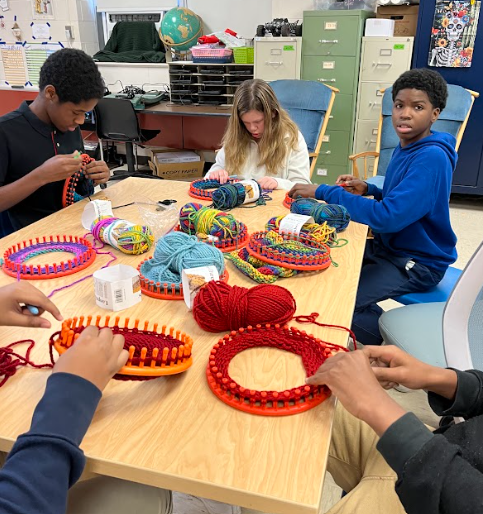
 Knitting looms offer middle schoolers far more than a craft project. They support motor development, focus, creativity, math skills, emotional regulation and confidence, all while being fun and engaging. Simple to use but rich in benefits, knitting looms are a powerful addition to any middle school learning environment.